The spare room at 14 Birch Street has held a treadmill and three boxes of cables since the owner moved in. Rented out, it could cover a third of the mortgage. Renting a room in the home you live in is one of the simplest ways to start as a landlord, sometimes called house hacking, but it still comes with rules, paperwork, and a stranger in your kitchen. This checklist walks through the steps in order, using the fictional three-bedroom Birch Street house, where the owner lives in one bedroom and rents the other two.
Check your lease, HOA, city rules, and insurance first; then price from the house, advertise fairly, sign a written agreement, and keep records from day one.
Not legal advice: check your local rules first
What you can do depends on where the house is. City and county rules can limit how many unrelated people share a home, require a rental registration or license, or treat a room in the owner’s home differently from a separate apartment. Security deposit limits, notice periods, and how you end an arrangement all vary by state. Stays shorter than 30 days are usually regulated as short-term rentals, with their own permits and taxes; this checklist is about longer stays.
Use this list to organize the questions, then check the answers for your city and state. A local landlord–tenant attorney can review your agreement before the first person moves in, which costs far less than fixing a bad one later.
Renting, not owning? Read your lease before anything else
If you rent your home, most leases don’t let you sublet or take in a roommate without your landlord’s written permission, and doing it anyway can put your own lease at risk. Some places give tenants a right to a roommate, but the details are narrow. Ask your landlord first, get the answer in writing, and add the new person to the lease if your landlord prefers that.
Check what you’re allowed to do
Before you advertise, confirm that nothing you have already signed or that governs the property rules a lodger out. The owner at Birch Street found a limit on rentals in the HOA rules and a question to ask the insurer, and nothing else.
- HOA or condo rules: some ban or limit rentals, or require board approval
- Mortgage: some loans require the home to stay your primary residence, which renting a room usually keeps true
- City and county: occupancy limits, rental registration or licensing, parking rules
- Safety: smoke and carbon monoxide alarms, and a bedroom with a proper exit, such as a window that opens
- Stays under 30 days: treat them as a different business with different rules
Call your insurer
A standard homeowner’s policy often assumes only your household lives there. Tell your insurer you plan to rent a room and ask what changes: many offer a landlord or home-sharing endorsement for a modest cost. Your lodger’s belongings are usually not covered by your policy, so ask them to get renter’s insurance and write that into the agreement.
Set the rent from what the house costs
Start from the house, not from one listing. Add up what the house costs each month, decide what you want the rooms to cover, and weight the rooms by size and features such as a private bath. Then compare with room listings nearby. Our guide to pricing rooms walks through the method with a worked example.
Decide what the rent includes before you advertise. At Birch Street, utilities and internet are included, which keeps each month to one predictable number, and the second room is priced lower because it is smaller and shares a bathroom.
Advertise and choose fairly
The federal Fair Housing Act makes discriminatory advertising illegal, and that part applies even to some small owner-occupied rentals that are otherwise exempt from parts of the law. Describe the room, the house, the rent, and the house rules. Don’t describe the person you want in terms of race, color, religion, sex, disability, familial status, or national origin, and check your state and city, which often protect more groups, such as source of income.
Use the same written criteria for every applicant, such as income relative to rent and references from previous landlords, and keep a note of why you chose who you chose. If you run background or credit checks, get written permission and follow the rules for them in your state.
Put the agreement in writing
A written agreement protects both of you. It should name the room, the rent and due date, what the rent includes, the deposit and when it comes back, the length of the stay and the notice either side gives, and the house rules for guests, quiet hours, cleaning, and shared spaces. Our house-rules checklist sorts which topics go in the agreement and which in a house-rules addendum.
Take dated photos of the room with the new resident before they move in, and keep them with the agreement. They settle most deposit questions at move-out.
Plan for taxes
In the United States, rent from a room is generally taxable income, and you can usually deduct the share of expenses that belongs to the rented part of the home, such as part of the utilities, insurance, and repairs. Keep every receipt from the first month. IRS Topic 414 and Publication 527 explain the rules, and a tax preparer can tell you how they apply to you.
Keep the records from day one
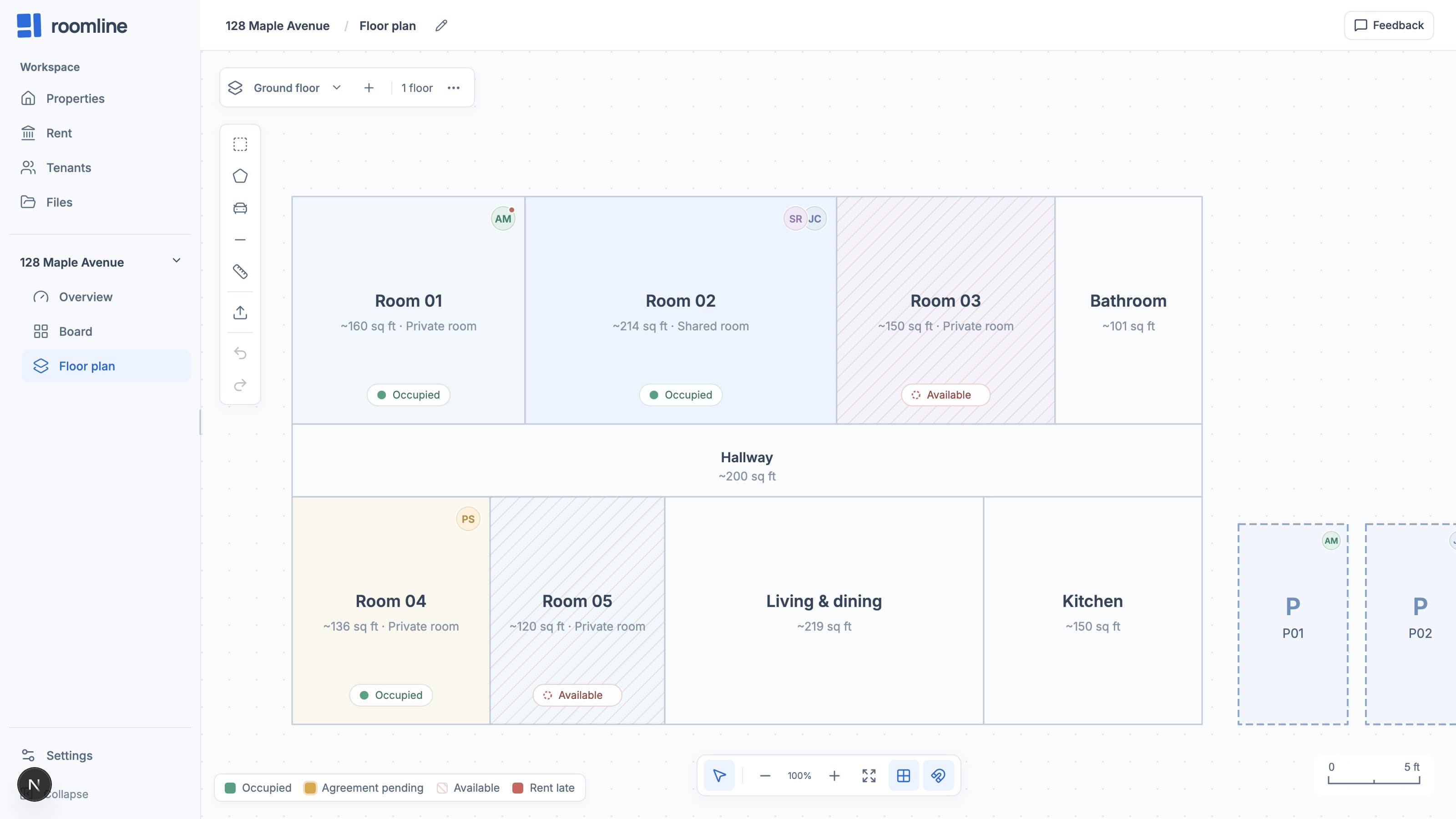
A single rented room still produces an agreement, a deposit, monthly rent, a shared utility bill, move-in photos, and the occasional repair. In Roomline, the Birch Street house is one property, and each rented room carries its own asking rent, agreement, deposit, and move-in photos, so the rent ledger shows who has paid at a glance.
The Basic plan fits one or two homes. Current plans and limits are on the pricing page.
- Room 02Stable space
- AgreementDates, rent, terms
- Jamie + SamPeople and shares
When they move outEnd the agreement and retain its evidence.
When someone moves inCreate a new agreement against the same room.
Common questions
Do I need a license to rent a room in my house?
It depends on the city and county. Some require rental registration or a license even for a single room in an owner-occupied home, and some don’t. Stays under 30 days are usually treated as short-term rentals with separate permits. Check your city’s housing or code-enforcement office before advertising.
Can I rent out a room if I rent my apartment?
Usually only with your landlord’s written permission. Most leases limit subletting and extra occupants, and breaking that can put your own lease at risk. Ask first, get the answer in writing, and consider adding the new person to the lease.
Is a person renting a room in my home a tenant?
Often yes, but some states treat a single lodger in the owner’s own home differently, including how the arrangement can be ended. The rules vary by state, so check yours before you write the notice terms in your agreement.
Is rent from a room taxable?
In the United States, generally yes. You report the rent and can usually deduct the share of expenses that belongs to the rented room. IRS Topic 414 and Publication 527 cover the rules; a tax preparer can apply them to your situation.