Cell F14 says Room 04 is still Riley’s. Cell J22, on a different tab, says Priya moved into Room 04 in January. A spreadsheet is often the right first tool for a rent-by-the-room house: it’s free, flexible, portable, and you already know how to use it. Replace it only when rows can no longer hold the relationships and history you need. This guide shows the signs, using Maple House and one ordinary room change.
Keep the sheet until copied facts and lost history cost more time than software saves; test with a real room change.
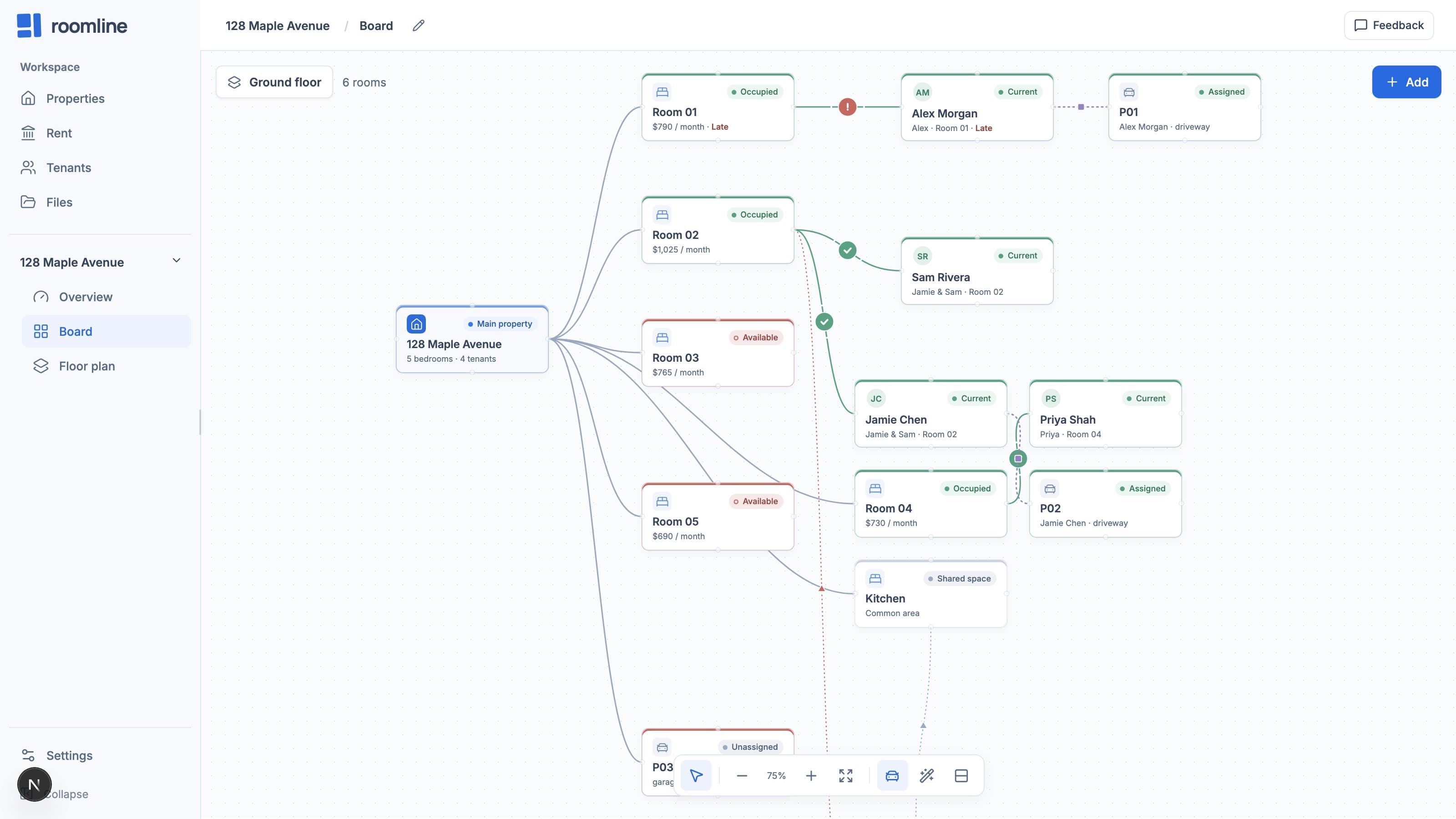
Keep the sheet while it answers the questions
For one stable house, a sheet can track residents, dates, rent, deposits, and notes with almost no setup. You control the columns and can hand the file to an accountant. Those are real advantages, not beginner compromises.
The sheet is still enough when one person maintains it, changes are rare, photos and documents live in a folder you trust, and you can say who lived in a room last year without detective work.
Watch for relationship debt
Trouble starts when the same fact is copied into several places. Take a common room-rental change: Riley moves out of Room 04 and a new person, Priya, takes it. In a typical workbook that’s edits on four tabs, residents, rooms, leases, and payments, plus renaming a photo folder. Miss one and the tabs disagree.
History is the second warning. Overwrite Room 04's row and you lose who lived there before. Keep adding rows and the current answer gets buried. Connected records let the person, the room, the agreement, and the payments change independently: end one agreement, start two, and the room’s history stays intact.
- Room 02Stable space
- AgreementDates, rent, terms
- Jamie + SamPeople and shares
When they move outEnd the agreement and retain its evidence.
When someone moves inCreate a new agreement against the same room.
Compare the same real task
The spreadsheet wins on flexibility and exit. Software wins only when its model matches your house and cuts down reconciliation. Run the Room 04 turnover test in both and count the edits.
| Question | Spreadsheet | Connected records |
|---|---|---|
| Who is in Room 04 now? | Fast, if the current sheet is up to date | Fast from the room or the person |
| Who was there last year? | Needs kept rows or dated copies | Agreement history |
| Where are the move-in photos? | Folder link and a naming rule | Filed with the condition record |
| Two payers on one agreement | Extra columns or another tab | Members and shares on the agreement |
| Which rooms are empty? | Filter, if every row is current | Floor plan colored by status |
| Change the workflow | Add a column right away | Limited to the product’s model |
| Leave the tool | The file is already portable | Depends on export quality |
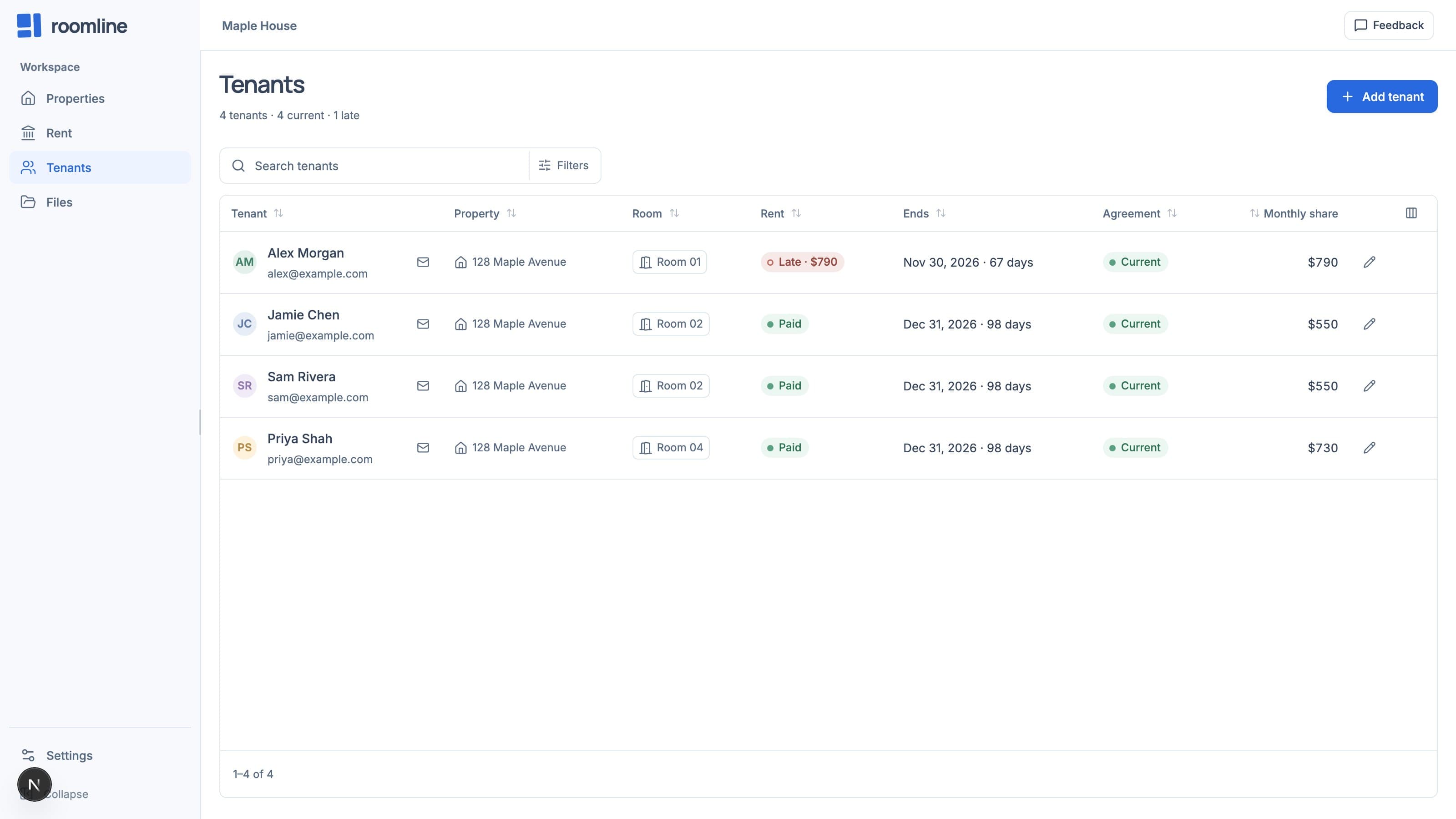
Migrate without losing your fallback
Treat migration as a check, not a leap. For a five-bedroom house, set aside an evening: five rooms, current agreements, and this month’s rent. The new tool should answer current and past questions faster, while the original sheet stays around until you trust the result.
- Duplicate, don’t overwrite, the source workbook
- Move one house and its current records first
- Leave original documents in their folders during the trial
- Check residents, agreement dates, and expected rent against the sheet
- Export the trial data before moving another house
Common questions
Is a spreadsheet good enough to manage a rental property?
For one stable house maintained by one person, often yes. A spreadsheet is free, flexible, and portable, and you can hand it to an accountant. It stops being enough when the same fact has to be copied across several tabs, or you can’t say who lived in a room last year without digging.
What should a rent-by-the-room spreadsheet track?
At minimum: each room by a stable name, its current resident, agreement start and end dates, the contracted rent and each person’s share, the deposit, and payments by month. Keep past agreements as rows instead of overwriting them, or you lose the room’s history. Link photos and signed documents from a folder with a consistent naming rule.
How long does it take to move a rental house from a spreadsheet into software?
For a five-bedroom house, plan on about an evening: five rooms, current agreements, and this month’s rent. Duplicate the workbook first, move one house, and check residents, dates, and expected rent against the sheet before moving another. Keep the original until you trust the new records.