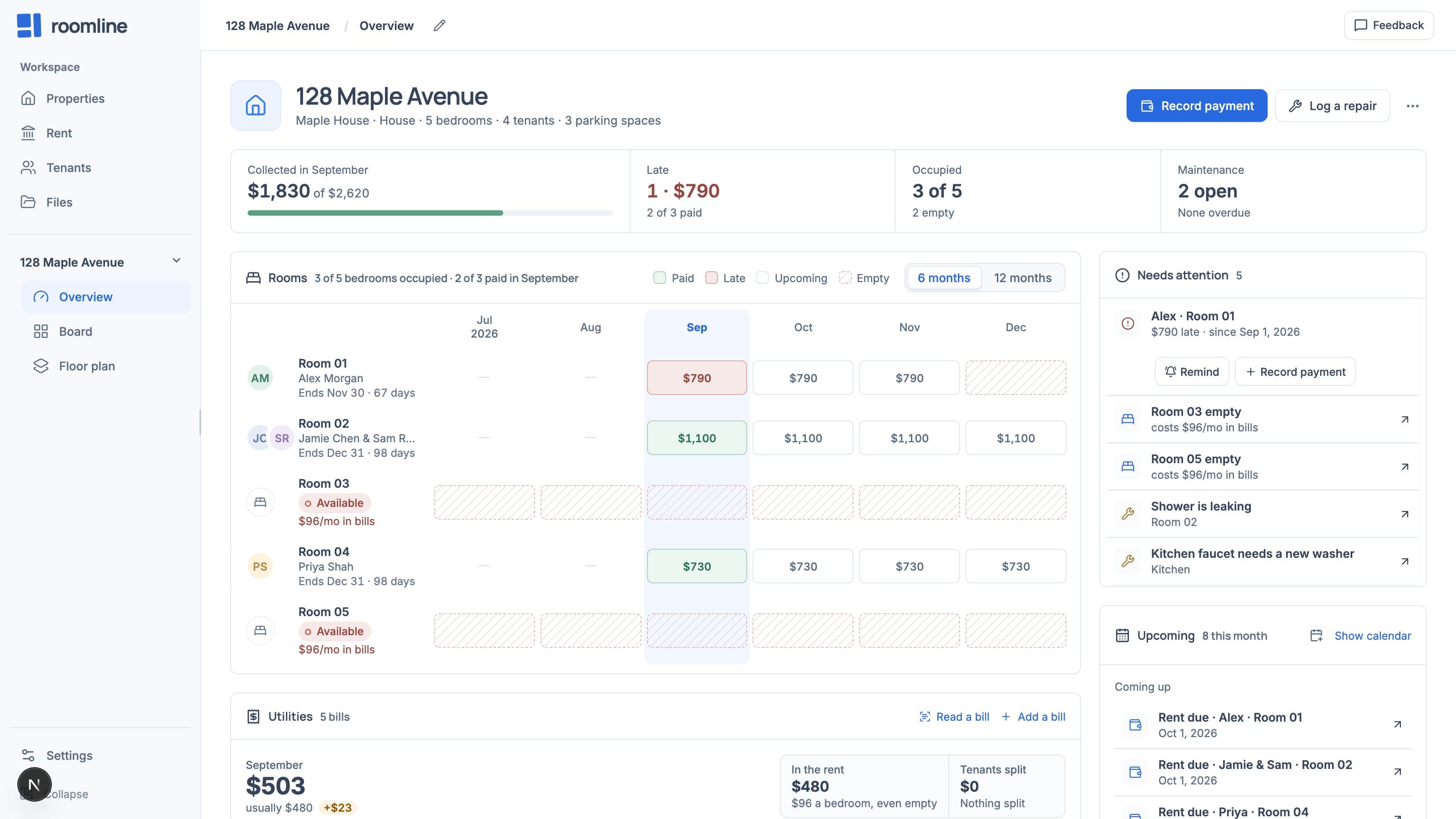
Same house, same five bedrooms: priced whole it’s about $3,400 a month; split by the room it’s $4,000, five agreements, and five different move-in dates. Most property software starts from a building and its units, because that fits apartment rentals. A rent-by-the-room house has a different shape: several agreements at one address, a kitchen everyone shares, and one room turning over while the rest of the house stays put. This guide compares the two models on the same five-bedroom Maple House.
Choose the model that matches your agreements, check how pricing counts bedrooms, and test it on your messiest house.
Start with what the agreement covers
A per-unit rental treats the whole apartment or house as the space covered by one agreement. A per-room rental treats one room, or sometimes two, as the covered space, while the kitchen, bathrooms, and hallways are shared. Your records should follow the arrangement you actually use.
Don’t assume a product can handle several agreements per unit. Ask the vendor to show your case: five current agreements at one address, two residents on one agreement, and a repair attached to a shared bathroom.
The same house, two ways
Take a five-bedroom house that would rent whole for about $3,400 a month. Let by the room, it might bring in about $4,000 at full occupancy, as in our room pricing guide. The extra income comes with extra work: five agreements instead of one, five move-in dates, and utilities you may now manage.
Vacancy risk changes shape too. When a whole-house tenant leaves, the house earns nothing until the next one. When one room of five is empty, the house still collects most of its rent; an empty $690 room is about 17% of the $4,000 target. Smaller, more frequent gaps are easier to absorb but need more attention.
| Question | Per unit | Per room |
|---|---|---|
| Agreements | 1 | 5 |
| Monthly rent at full occupancy | About $3,400 | About $4,000 |
| Turnover dates a year | Usually 1 | Often several |
| One tenant leaves | Income drops to $0 | Income drops by one room |
| Utilities | Usually the tenant’s | Often included or split |
| Shared areas | Part of the unit | Explicit shared spaces |
| Parking | Usually comes with the house | Can be assigned to one person |
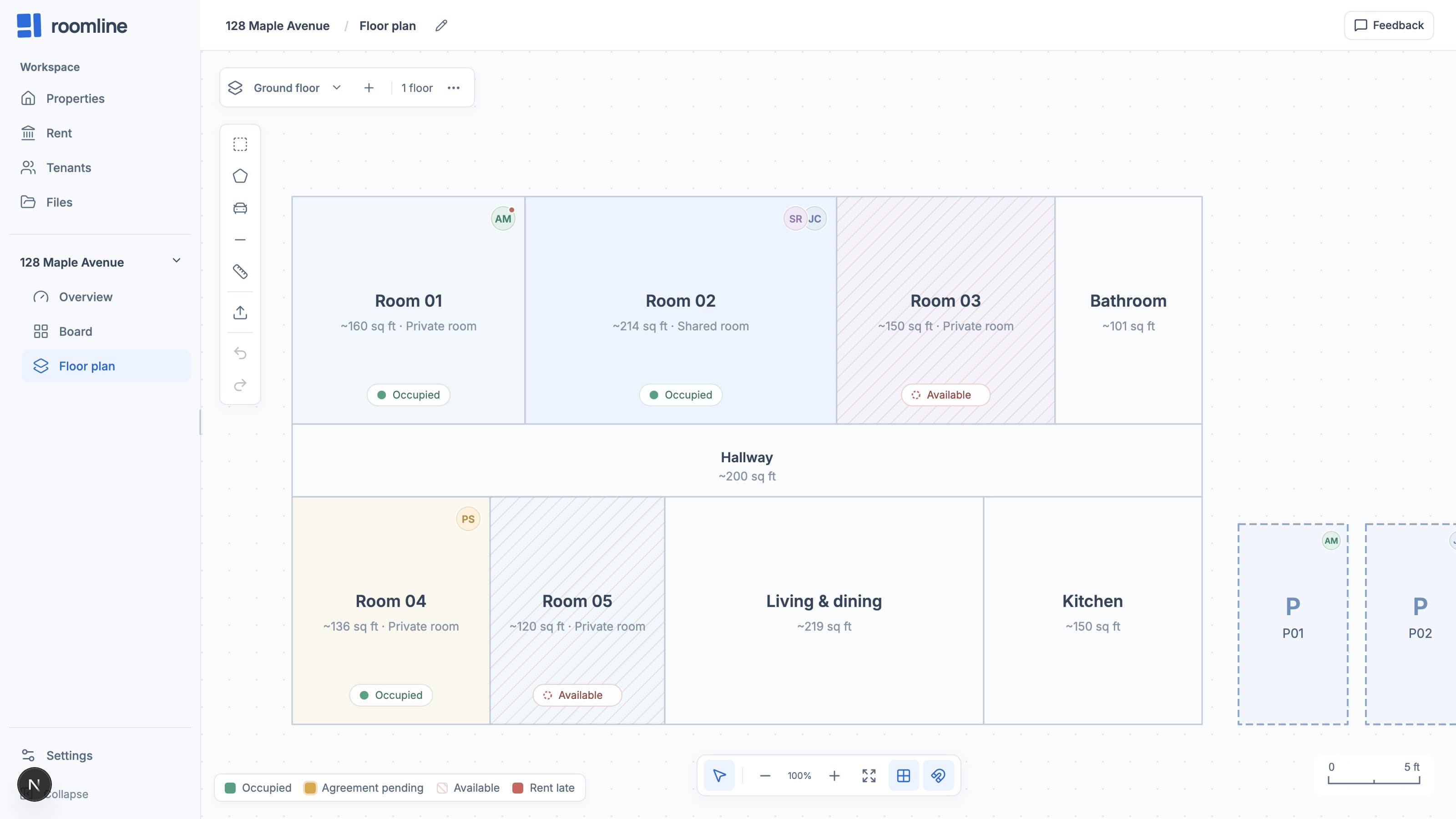
Give shared space a clear home
A kitchen or hallway shouldn’t be filed under a bedroom just because the software needs a unit. Name shared areas so their photos, files, and repairs have somewhere to go.
This is a recordkeeping choice, not a decision about who is responsible. The agreements and local rules decide responsibility; where a room sits on a floor plan does not.
Check how software pricing counts rooms
Per-unit pricing and per-room renting can collide. If a product bills per unit and you set up each bedroom as a unit, a five-bedroom house costs as much as five apartments. Ask how bedrooms are counted before you set anything up.
Landlord Studio’s official US page, checked September 20, 2026, lists annual Pro pricing of $12 per month for three units plus $1.20 per extra unit. Set up as 11 room units across two rent-by-the-room houses, that’s $12 plus 8 × $1.20, or $21.60 a month. TurboTenant’s official page lists paid tiers starting at $12.42 per month, also counted per unit. Treat these as dated examples and confirm current prices on each vendor’s site.
Roomline plans are priced by property, with an included allowance of units or bedrooms, so the example house is one property rather than five billable rentals. The pricing page shows current plans and limits.
Run the awkward-property test
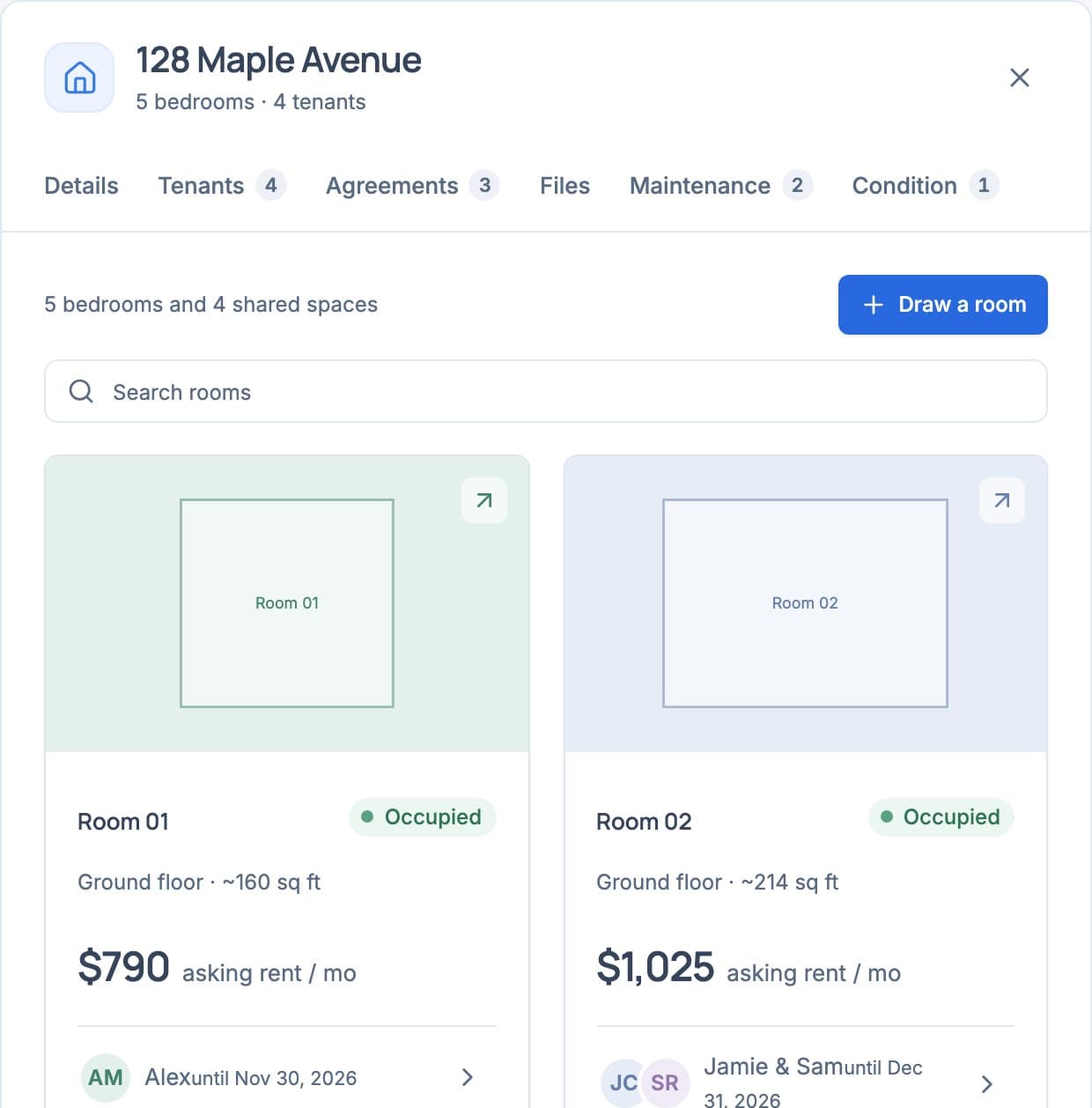
Roomline supports properties, optional units, rooms, shared spaces, agreements with several members, and parking assigned to a person. Floor plan placement is optional. Run the same test in every tool on your shortlist before moving more than one property.
- Create five rooms at one address
- Add two residents to one agreement with separate shares
- Record a shared kitchen without assigning it to a bedroom
- Assign parking to a person, not a room
- Find a past agreement after the room changes hands
Common questions
What is the difference between renting by the room and renting by the unit?
A per-unit rental has one agreement covering the whole apartment or house. A per-room rental has separate agreements for individual rooms, with the kitchen, bathrooms, and hallways shared. Renting by the room usually brings in more rent but means more agreements, more turnover dates, and often utilities to manage.
Is renting by the room more profitable than renting the whole house?
Often, but not automatically. In the fictional Maple House example, five rooms bring in about $4,000 a month at full occupancy against about $3,400 for the whole house, and that difference has to cover more turnover, furnishing, utilities, and your time. Price the house from its costs and a vacancy buffer before comparing.
Is renting by the room legal?
In many places, yes, but some cities limit how many unrelated people can share a house, require a rooming-house license, or treat room rentals differently from standard tenancies. Check your city and county zoning and licensing rules before converting a house. This is not legal advice; a local attorney or housing office can confirm what applies.
Can property management software handle several leases in one house?
Some products can and some can’t, so ask the vendor to show your case: five current agreements at one address, two residents on one agreement, and a repair on a shared bathroom. Roomline supports several agreements per property, agreements with several members, and shared spaces as their own records.